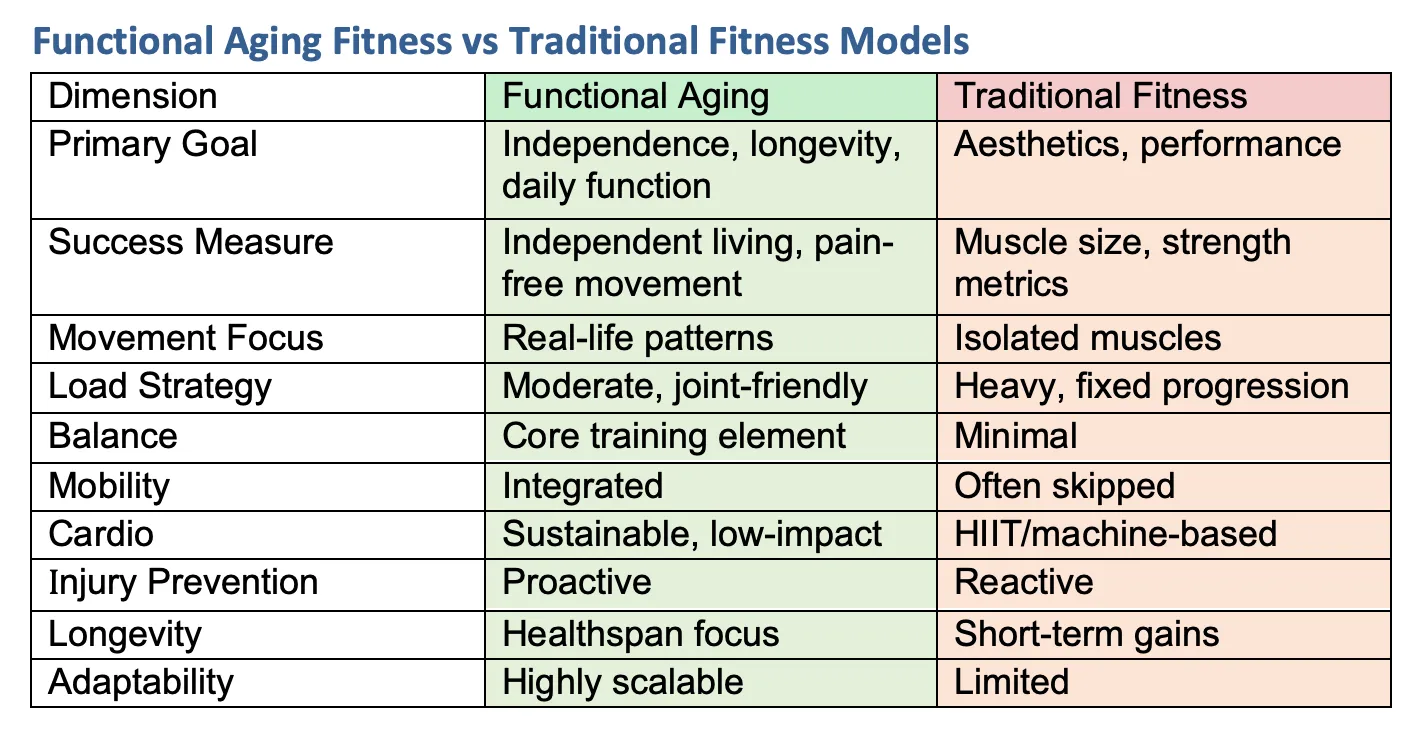
The Functional Aging Training Model (FATM)
The approach I use with every client!
Using the FATM with my clients
-
We start with where you are now
Every program starts with a thorough individual assessment, including health and exercise history, and identifying your current capabilities and constraints.
-
Your goals, not generic ones
People 65+ have very different goals from people in their 40s. Together, after the assessment, we set goals that are important to you and the life that you live. That will help keep you motivated and engaged.
-
Train for real life
Getting up from a chair, preventing falls, living independently. Mobility that lets us continue doing the activities we love. The metrics we use to plan your exercise program come directly from the goals we’ve set.
-
Progressive overload
Building strength is a process, and over time we’ll gradually increase the load or stress placed on your muscles. We do this by adjusting: the amount of weight you’re lifting, the number of repetitions you do for each activity, how long you work out, and by shortening your rests between sets and reps.
-
Safety is non-negotiable
For adults 65+ an injury can be disastrous. If someone 35 injures themselves during training, recovery can be brief. But for people 65+ injuries can be much more challenging. That’s why the FATM embeds safety into every exercise strategy, every individual routine, every session.
-
Re-assess and adjust
Achieving your goals is why you’re doing this and knowing where you are in relation to those goals tells us whether we’re on the right track. On a regular basis we’ll reassess your progress and adjust your program as needed. We use quantitative and qualitative metrics — everything from the number of exercise repetitions and weights used — to how quickly you can get up out of a chair without using your arms.